
Key Takeaways:
- The "Value Equation" determines sales: (Dream Outcome × Likelihood) ÷ (Time × Effort).
- Etsy's data ranks photos as the #1 factor in purchase decisions, higher than price, shipping costs, or reviews.
- Generic mockups lower trust. Hyper-realistic, textural mockups prove the product is "real."
- If the mockups look high-quality, customers will be willing to pay more
The "Invisible" Problem With Your Print on Demand Store
You have a great design. You picked a quality supplier. You may even be running ads.
But nobody is buying.
Why?
It’s not the price, and it’s usually not the design. It’s the Perceived Value.
In Print on Demand (POD), we often forget that customers can’t touch, feel, or try on our products. They are buying a promise. And if that promise looks like a flat, digital render, the value feels low.
To fix this, we need to look at the psychology of value. Specifically, we need to look at The Value Equation, a concept popularized by Alex Hormozi in $100M Offers.
When you apply this equation to your POD business, you stop competing on price and start dominating on value.
The Value Equation for POD Sellers
The Print on Demand Value Equation
Dream Outcome × Perceived Likelihood of Achievement
Time Delay × Effort & Sacrifice
- Dream Outcome: The identity or status the customer wants (e.g., "cool streetwear kid").
- Perceived Likelihood of Achievement: The customer's trust that the product is real and high quality.
- Time Delay: How fast they get the emotional payoff.
- Effort & Sacrifice: The mental friction required to imagine the product.
The Goal: Maximize the top two variables (Outcome + Likelihood) and minimize the bottom two (Delay + Effort).
Think of it like a fraction.
- The Top Part (What they get): You want this to be HUGE. This is their dream result and their belief that you can actually deliver it.
- The Bottom Part (What they pay): You want this to be TINY. This is the time they wait and the effort they have to put in.
Let’s break down how to hack this equation for your Print on Demand business.
1. The Dream Outcome (Increase This)
What does your customer actually want?
They aren't just buying a t-shirt or a mug. They are buying an identity. They are buying the feeling of being "that cool person" who wears streetwear, or the "cozy homeowner" with the aesthetic candle.
- The POD Trap: Most sellers list products focusing on their design. That describes the product, not the dream.
- The Fix: Sell the vibe or the emotion. Your listing shouldn't just show a shirt; it should show a lifestyle.
2. Perceived Likelihood of Achievement (Increase This - CRITICAL)
Do they believe they will actually get the result?
This is where 90% of POD sellers fail.
In a physical store, "Likelihood of Achievement" is 100%. I try the shirt on; I know it fits. Online, the risk is high. "Will the print look cheap?" "Is the fabric scratchy?" "Will this look like a weird digital sticker?"
The Fix: You need proof.
Etsy’s own data confirms that compelling photography is the single most important factor for making sales. In their survey, 90% of shoppers said photo quality was extremely important to their purchase decision—ranking it higher than price, shipping cost, or reviews.
If your main image is a generic mockup (the same one 50 other shops are using), the Perceived Likelihood drops like a stone. It screams "cheap dropshipper."
High-end, realistic images and videos act as visual proof that the product is real, tangible, and high-quality.
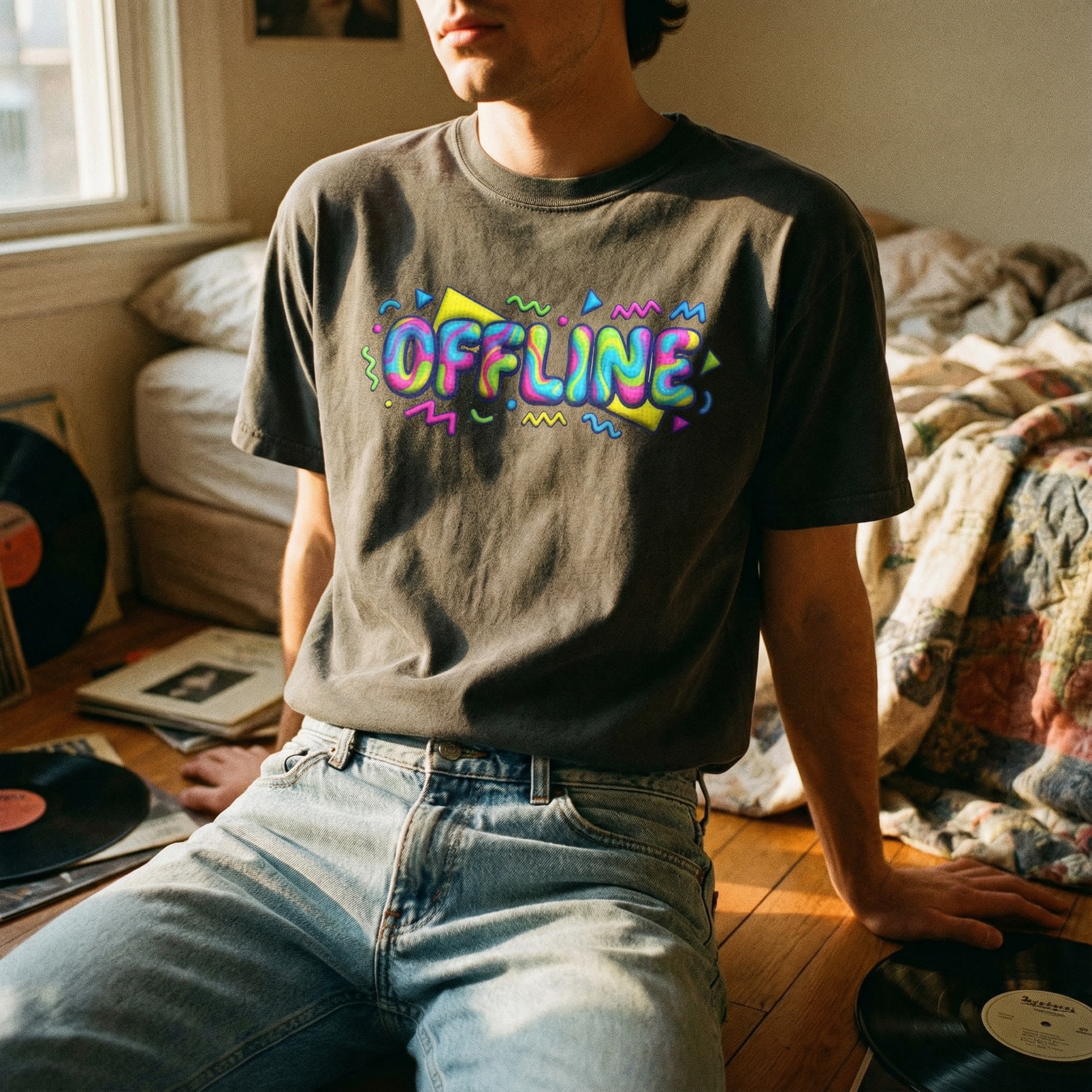
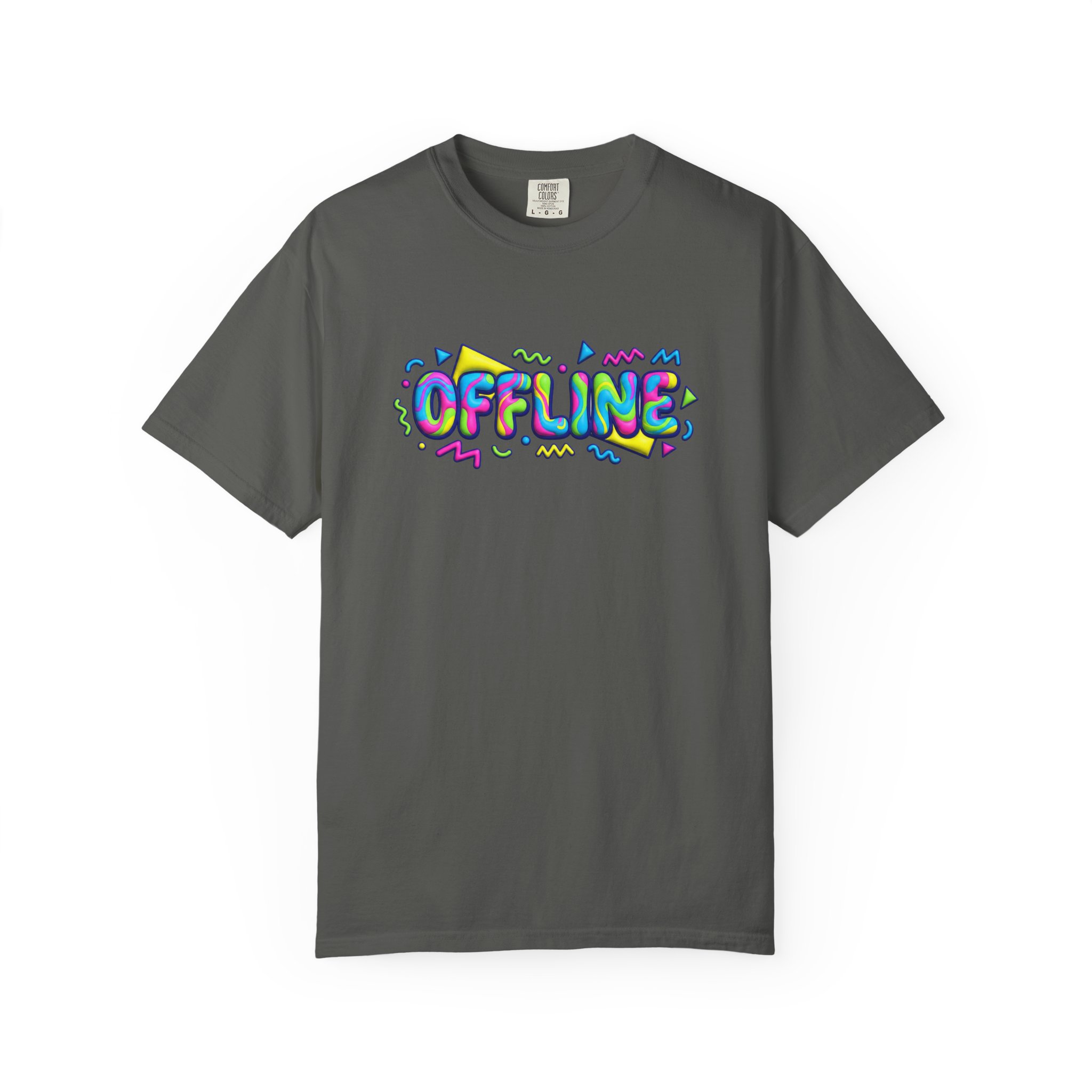
Try these examples:
The "Sticker Effect" vs. Reality
Left (Standard Mockup): Notice how the design looks like a flat digital sticker floating on top of the shirt. It lacks shadows or depth. This lowers trust because it looks fake.
Right (PODMocks AI): The design interacts with the fabric. See how the logo curves with the shirt's wrinkles and fades slightly in the shadowed areas? This texture mapping signals to the buyer's brain that the product is real and tangible.
When a customer sees a realistic mockup, their brain unconsciously signals: "This is real. This is safe to buy."
The Mechanism: How PODMocks Mockups Work
Unlike typical overlays (Placeit, Canva, Photoshop) that paste a flat image onto a photo and try to fix it with filters, PODMocks uses an AI-powered process that re-imagines your design and places it in the ideal context.
- The AI selects lighting, vibe, props, background, and human models that fit your design.
- Your artwork is dynamically wrapped around fabric folds and seams.
- Shadows and highlights are generated so the print looks embedded in the garment, not floating on top.
Why Things with Pretty Photos Sell for More
Research proves that when products look better, customers stop worrying about the price.
A key study found that as the visual quality of your product goes up, the consumer's willingness to pay goes up as well.
If you want to charge $30 for a tee instead of $18, you don't need better cotton; you need better photos. When your listing looks premium, customers stop "shopping around" for the cheapest option and focus on the value of your brand.
3. Time Delay (Decrease This)
How long until they get the benefit?
In POD, we have a disadvantage: shipping times. We can't compete with Amazon Prime. But "Time Delay" isn't just about shipping; it's about the emotional payoff.
The Fix: Close the gap with visuals.
When a customer sees a stunning video of your product in a lifestyle setting, they get an immediate dopamine hit. They can visualize themselves owning it right now.
4. Effort & Sacrifice (Decrease This)
How hard does the customer have to work to believe you?
In a physical store, the effort is physical: they have to drive there and try it on. Online, the effort is mental. This is what experts call "Cognitive Load."
If your customer has to squint at a flat digital file and imagine how it looks on a body, you are forcing them to do work. You are asking them to bridge the gap between "clipart" and "clothing" in their own heads.
The Fix: Do the mental work for them.
When you use a realistic, textural mockup, or better yet a video, you remove that cognitive friction. They don't have to guess if the fabric drapes well. They don't have to wonder if the print looks like a sticker. You have removed the "sacrifice" of uncertainty.
When the brain doesn't have to work to understand the product, the "Buy" button feels much easier to press.
Bonus: The "Hidden" Effort Variable
We just talked about your customer's effort. But what about yours?
Usually, creating these high-value assets requires massive effort: hiring models, buying samples, and learning Photoshop. This is where PODMocks breaks the equation.
We reduce the shopper's effort by giving them realistic visuals, but we also reduce your effort to zero. You drag, drop, and get the asset. You win on both sides of the equation.
How PODMocks Solves the Equation for You
I built PODMocks because I saw too many POD shops failing the Value Equation. They had great designs, but customers weren't seeing the "Dream Outcome" and had a low "Perceived Likelihood of Achievement".
Here is how PODMocks changes your math:
- Maximize Perceived Likelihood: We turn "raw" flat images into hyper-realistic photos and videos. Your customer sees a real product, not a digital file. Trust goes up. Conversion goes up. Your profit goes up.
- Reduce Shopper Effort: Realistic visuals remove the cognitive friction of imagining the product, so saying "yes" feels easy.
- Reduce Your Effort: You don't need a camera, models, or Photoshop skills. You drag and drop your raw file, and our AI does the heavy lifting.
- Minimize Time Delay: What used to take hours of editing now takes seconds. You can launch 100 products in the time it used to take to launch one.
Stop Selling "Products." Start Selling Value.
If you want to charge premium prices and build a loyal brand, you have to look the part. You can’t control the shipping time of your POD provider, but you can control how valuable your product looks the second a customer lands on your listing.
Don't let a bad mockup kill your value.
Frequently Asked Questions
Why is "Perceived Likelihood of Achievement" so low in POD? Because customers cannot physically inspect the item. If the product photo looks like a fake digital overlay, they subconsciously assume the actual product will be low quality. Realistic mockups bridge this trust gap.
Can I really charge more just by having better mockups? Yes. Research proves that when your photos look professional, customers are less likely to "shop around" for a cheaper price. They stop comparing you to the $15 shirts and start seeing your brand as a premium option worth paying for.
How do video mockups help the Value Equation? Video mockups reduce "Time Delay" by providing an immediate emotional payoff. Seeing the fabric move and catch the light helps the customer vividly visualize owning the product, which is a powerful psychological driver that static images often lack.
Try PODMocks for Free and Upgrade Your Value Equation Today →
Topics:
Tiger
Top 1% Etsy Seller & Founder of PODMocks.